- +855 92 72 73 91
- sunkang@thats-taste-coffee.com.kh
- Mon - Sat: 7:30 - 18:30

When people think about espresso, one of the first things they notice is the golden-brown foam floating on top of the shot — the crema. In coffee culture, crema is often associated with premium espresso, professional machines, and skilled baristas. But does crema actually determine the quality, flavor, and aroma of espresso coffee?
The answer is: partially, but not completely.
What Is Crema?
Crema is the creamy layer formed when hot water under high pressure extracts coffee oils, gases, and microscopic particles from finely ground coffee. During espresso extraction, carbon dioxide trapped inside roasted beans mixes with emulsified oils to create that signature foam.
Fresh coffee beans, especially medium to dark roasts, tend to produce thicker crema because they still contain more trapped gases after roasting.
A good crema usually appears:
Golden to hazelnut brown
Fine and velvety
Persistent for at least a short time
Even in texture without large bubbles
Crema contributes visually to espresso and can slightly influence mouthfeel and aroma retention. However, it should never be judged as the main indicator of espresso quality.
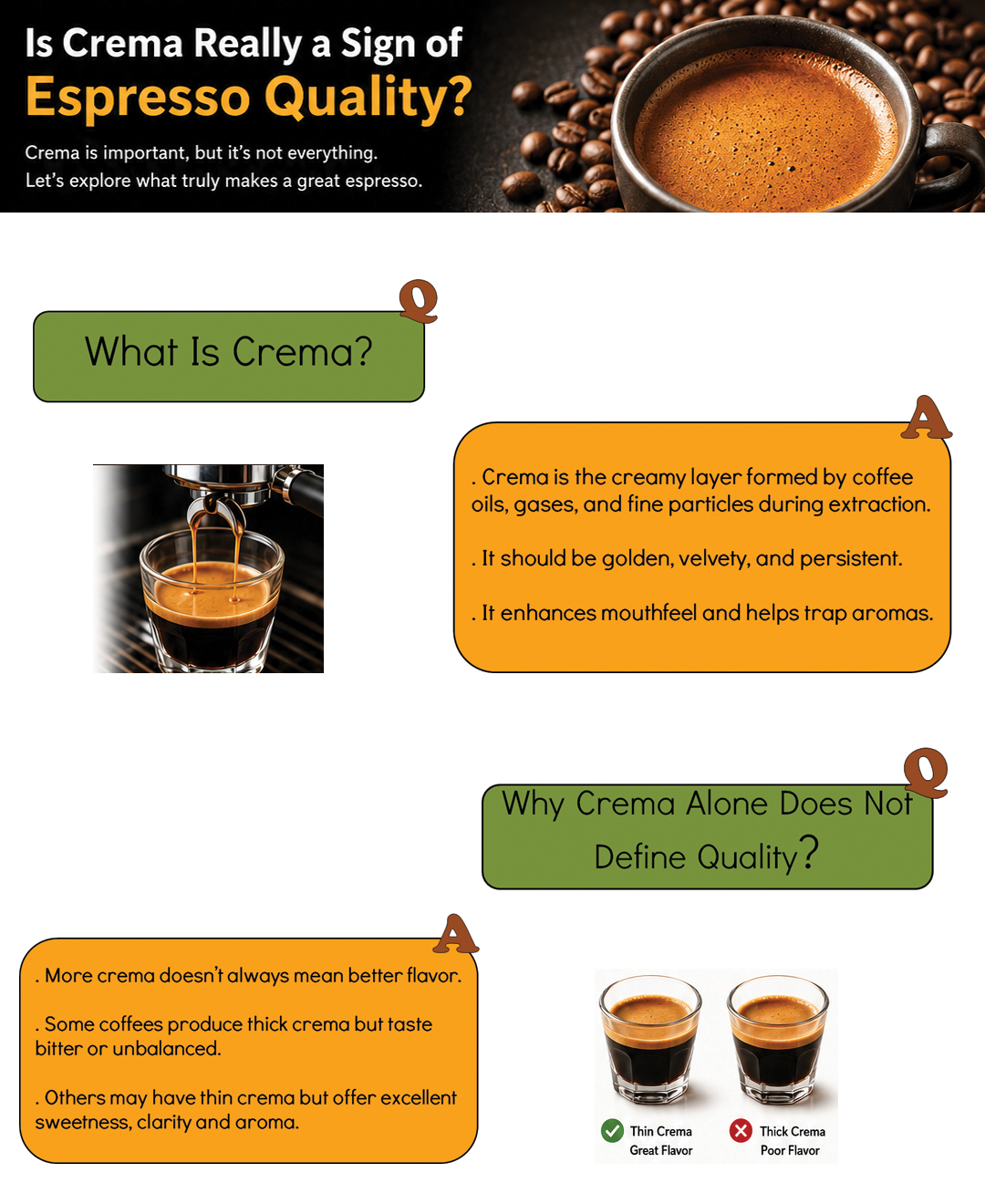
Why Crema Alone Does Not Define Quality
Many people assume:
“More crema = better espresso.”
This is not always true.
Some coffees naturally create large crema volumes while tasting bitter, burnt, or unbalanced. Others may produce thinner crema yet deliver exceptional sweetness, clarity, and aroma.
For example:
Very dark roasted beans often create thick crema because of higher gas content, but they may mask delicate flavor notes. Robusta coffee produces much more crema than Arabica, yet Arabica is generally preferred for flavor complexity. Extremely fresh beans can create excessive crema while still tasting underdeveloped or unstable.
Crema is therefore only one visual element, not a complete quality assessment.
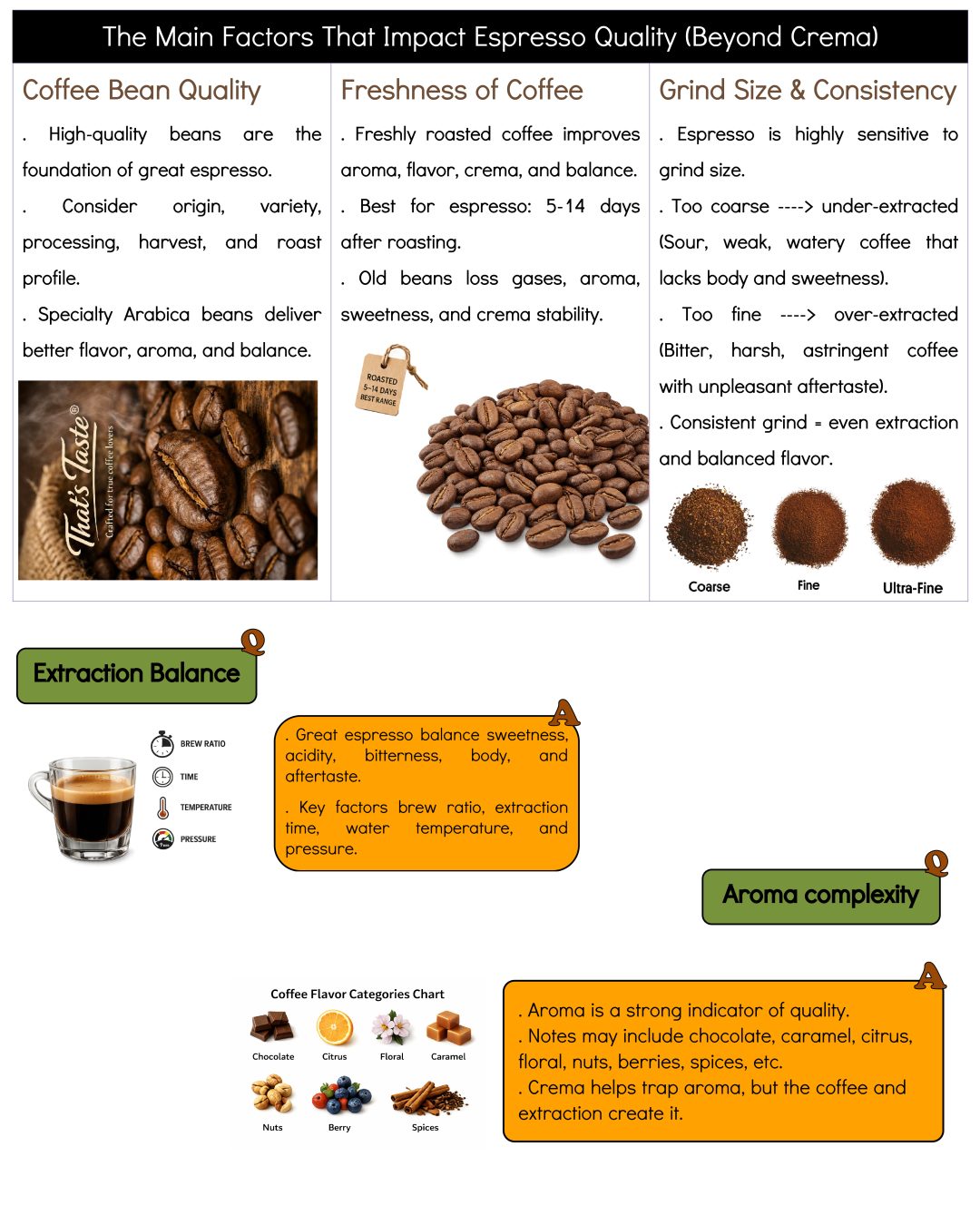
1. Coffee Bean Quality
The foundation of great espresso begins with high-quality beans.
Important factors include:
Variety and origin
Processing method
Harvest quality
Roast profile
Freshness
Specialty-grade Arabica coffees often deliver:
Cleaner flavors
Better sweetness
More complex aromas
Balanced acidity
Without quality beans, even perfect crema cannot save the espresso.
2. Freshness of Coffee
Freshly roasted coffee greatly affects:
Aroma intensity
Flavor clarity
Extraction balance
Crema formation
Coffee is usually best for espresso after resting:
Around 5–14 days after roasting
Beans that are too old lose:
Carbon dioxide
Aromatic compounds
Sweetness
Crema stability
3. Grind Size and Consistency
Espresso extraction is extremely sensitive to grind size.
If the grind is:
Too coarse → under-extracted, sour, weak body
Too fine → over-extracted, bitter, harsh
Consistent particle size is essential for even extraction and balanced flavor.
A high-quality grinder often impacts espresso quality more than the espresso machine itself.
4. Extraction Balance
A great espresso should balance:
Sweetness
Acidity
Bitterness
Body
Aftertaste
Typical espresso extraction targets include:
Brew ratio
Extraction time
Water temperature
Pressure consistency
Even beautiful crema cannot hide poor extraction.
5. Aroma Complexity
Aroma is one of the strongest indicators of espresso quality.
High-quality espresso may contain notes such as:
Chocolate
Caramel
Citrus
Floral
Berry
Nuts
Spices
Crema can help trap aromas temporarily, but the actual aromatic complexity comes from the coffee itself and proper extraction.
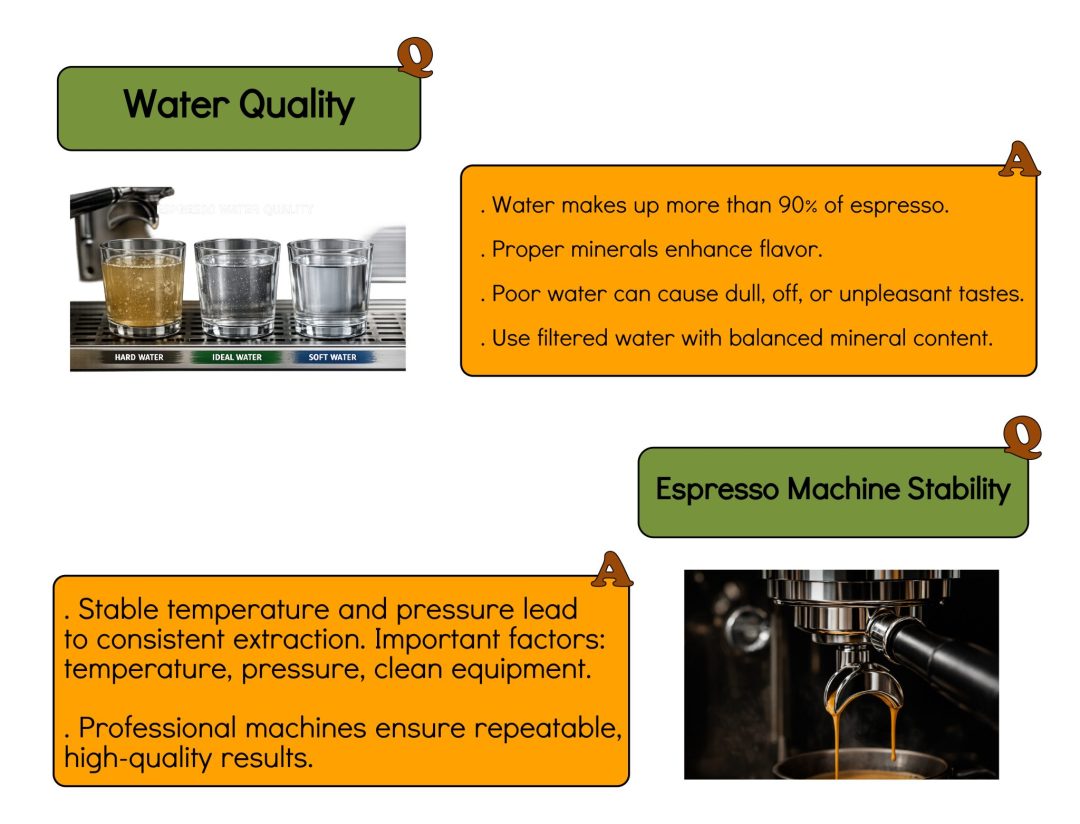
6. Water Quality
Water makes up more than 90% of espresso.
Poor water quality can flatten flavor and create unpleasant tastes. Ideal water should have balanced mineral content and proper filtration.
Even excellent beans can taste dull with incorrect water chemistry.
7. Espresso Machine Stability
Temperature and pressure stability strongly influence extraction consistency.
Important machine factors:
Stable brewing temperature
Consistent pressure, Clean equipment, Proper maintenance.
Professional machines help maintain repeatable results, especially in busy cafés.
A visual characteristic
Part of texture and presentation
—not the ultimate measure of espresso quality.
So, How Important Is Crema?
Crema still has value. It can indicate: Freshness, Proper espresso extraction, Roast characteristics, Brewing pressure.
But crema should be viewed as:
A supporting indicator, A visual characteristic and Part of texture and presentation, not the ultimate measure of espresso quality.
⸻
Final Thoughts
The best espresso is not judged by crema alone.
A truly high-quality espresso is determined by:
Bean quality
Roast development
Freshness
Proper grinding
Balanced extraction
Aroma complexity
Sweetness and aftertaste
Crema may look beautiful, but flavor always matters more than appearance.
In specialty coffee, many professionals would rather drink an espresso with thin crema and outstanding flavor than a thick crema shot that tastes bitter or empty.
At the end of the cup, espresso quality is about balance, clarity, sweetness, and the overall sensory experience — not just the foam on top.